
The Ultimate Guide: Frequently Asked Questions About Trekking Mount Rinjani
Planning to conquer the second-highest volcano in Indonesia? Mount Rinjani (3,726 meters) on Lombok Island is one of the most rewarding yet challenging treks in Southeast Asia.
To help you prepare flawlessly, here is the ultimate, comprehensive list of Frequently Asked Questions (FAQ) covering everything from logistics and fitness to packing and environmental rules.
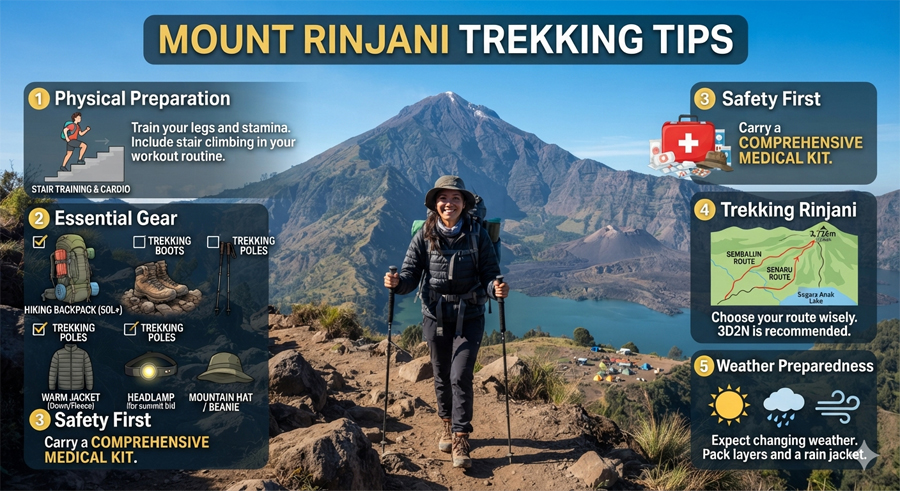
1. Season, Weather, and Logistics
When is Mount Rinjani open for trekking?
The official trekking season runs for nine months. It opens from April 1st to December 31st.
When does the park close, and why?
The national park closes from January 1st to March 31st every year. Closure happens during the peak monsoon season due to heavy rains, high winds, and landslide risks. It also gives the ecosystem time to recover.
When is the absolute best time to climb?
The dry season from May to October offers the best trekking conditions. You get clear blue skies and incredible sunrise views. July and August are the busiest peak holiday months. May, June, and September are the best “sweet spot” months because you get great weather with fewer crowds.
How cold does it get at the top?
The weather changes fast. Daytime hiking can be hot and humid (25°C to 30°C). However, temperatures drop to 5°C to 10°C at night on the crater rims. During the 2:00 AM summit push, freezing wind chills plunge temperatures close to 0°C.
2. Regulations, Permits, and Booking
Can I trek Mount Rinjani without a guide?
No. Solo or independent trekking is strictly prohibited. All hikers must register through a licensed trekking agency. A certified mountain guide and local porters must accompany you.
How do I get a trekking permit?
Park entry uses a strict daily quota system via the e-Rinjani digital platform. When you book a package with Senaru Trekking, they handle mandatory insurance, park registration, and e-permits automatically.
What are the trash regulations?
The park enforces strict “Zero Waste” leave-no-trace protocols. Trekking companies must log their plastic and canned goods before entering. They must carry all trash back down the mountain for inspection. Choosing an agency committed to genuine eco-friendly trekking keeps the mountain clean.
3. Fitness, Difficulty, and Routes
How difficult is the climb?
The trek is classified as Hard / Challenging. Trails are easy to follow, but the terrain involves steep dirt paths and exposed ridges. The final summit push goes over loose volcanic scree (gravel). You slide back half a step for every step forward. You need a solid baseline of cardio fitness and strong legs.
Which route should I choose?
- Sembalun Route: Starts high in a flat savanna field. It offers direct access to the summit campsite (Sembalun Crater Rim). Choose this if you want to reach the summit on day two.
- Senaru Route: Starts in a lush, dense tropical rainforest. It features steep, shaded clay trails leading to the Senaru Crater Rim. It offers the most iconic postcard views of the lake.
- Torean Route: Famous for its dramatic, cliffside river canyon views. Hikers mostly use it as a scenic exit route rather than an ascent trail.
What is the most popular itinerary?
The 3-Day, 2-Night (3D2N) Summit and Lake program is highly recommended. It takes you to the summit, drops down into the Segara Anak crater lake to swim in natural hot springs, and brings you back up the other side.
4. Life on the Mountain
What do the local porters do?
Local porters are the absolute heroes of the mountain. They carry all the heavy communal gear. This includes canvas tents, sleeping bags, cooking equipment, fresh water, and food ingredients. They hike ahead of you to set up camp and cook fresh meals.
Note: Porters do not carry your personal backpack unless you pay for a dedicated private porter.
What is the food like?
Your Mount Rinjani tour package includes three freshly cooked meals a day. Your crew prepares everything right on the trail. You can expect hearty, delicious Indonesian dishes. Popular meals include Nasi Goreng (fried rice), Mie Goreng (fried noodles), chicken curry, banana pancakes, fresh tropical fruits, and hot tea or coffee.
Are there toilet facilities on the trail?
There are no permanent public bathrooms on the mountain. Instead, your trekking crew will set up a private toilet tent at each campsite. This consists of a small privacy tent built over a cleanly dug pit in the ground. The crew fills the pit back in with earth before the group departs to ensure eco-friendly trekking standards.
5. Packing & Gear Essentials
What gear must I bring myself?
Your trekking agent provides tents, mattresses, and fresh food. However, you must bring your own personal items. A good Rinjani packing list ensures your comfort and safety. Pack these essential items for your climb:
- Sturdy hiking boots: Choose broken-in boots with a deep grip traction to handle loose volcanic gravel.
- A high-quality headlamp: This item is crucial for navigating the pitch-black 2:00 AM Rinjani summit trek.
- Warm clothing layers: Bring a thermal base layer, a warm fleece, and a windproof down jacket for freezing nights.
- Trekking poles: These are highly recommended to balance your weight and save your knees on steep descents.
- Lightweight rain jacket: Pack a waterproof shell or a poncho in case of sudden high-altitude downpours.
- Personal toiletries: Bring biodegradable wet wipes, essential medication, and high-SPF sunscreen.