
Mount Rinjani is a premier destination for travelers seeking world-class natural beauty. While its scenic landscapes are widely celebrated, navigating its steep trails requires exceptional physical strength, endurance, and mental stamina.
For beginners with no prior hiking experience, preparing properly is essential for a safe and successful summit. Here is Mount Rinjani Trekking tips:
Route Strategy & Itinerary Selection – Mount Rinjani Trekking tips.
- Sembalun Route: Best starting point for the summit push. It features open, hot savannah grasslands with a steady incline.
- Senaru Route: Best for ending your trek or doing a lake-only hike. It goes through a shaded, humid tropical rainforest.
- 3D2N Package: The ideal duration. It allows you to summit on Day 2 and descend to the crater lake hot springs on the same day.
- 2D1N Package: Only recommended if you are in peak physical condition. It skips the crater lake entirely due to time constraints.
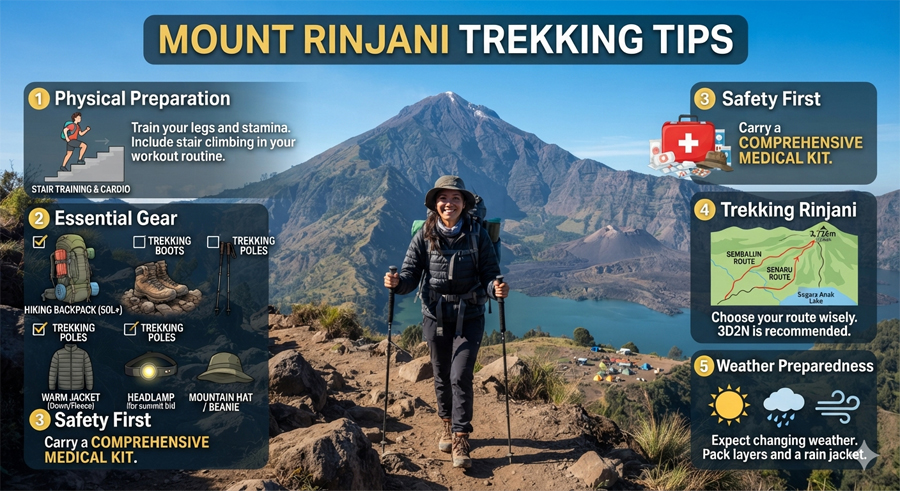
Physical Preparation (1 Month in Advance)
- Cardio training: Run, cycle, or swim 3–4 times weekly.
- Endurance building: Improve heart and lung capacity for steep climbs.
- Leg strengthening: Practice squats and lunges for trail durability.
- Core power: Do planks to handle heavy backpack loads.
- Incline simulation: Walk up stairs or small hills regularly.
- Weighted practice: Train with a 5–10 kg backpack.
Mental Preparation & Breathing Techniques
- Mindset conditioning: Expect sudden weather changes and steep, rugged terrain.
- Pacing strategy: Focus on steady, consistent steps rather than speed.
- Milestone tracking: Break the trail into small, manageable rest stops.
- Rhythmic breathing: Sync your inhalations and exhalations with your footsteps.
- Deep belly breathing: Inhale through the nose to maximize high-altitude oxygen intake.
- Panic management: Stop and take slow, deep breaths if feeling overwhelmed.
Official Regulations & Administration
- Online booking: Book the trekking in advance to check the availability, especially in high season ( July to August )
- Daily quotas: Access is limited by strict daily visitor caps.
- Health certificate: Secure a doctor-issued medical certificate within 3 days of hiking.
- Medical clearance: Confirm you are physically fit for high-altitude trekking.
- Life insurance: Verify your package includes specific mountain accident insurance.
Essential Packing Gear
- Clothing & Layers:Moisture-wicking shirts: Avoid cotton to stay dry from sweat.
- Warm insulation: Pack a fleece or lightweight down jacket.
- Outer shell: Bring a windproof and waterproof rain jacket.
- Trekking pants: Choose lightweight, quick-dry fabrics.
- Thermal base layers: Keep warm during freezing nights at camp.
- Accessories: Pack a beanie, gloves, and thick hiking socks.
Footwear & Support:
- Hiking boots: Wear broken-in shoes with deep ankle support.
- Trekking poles: Reduce joint impact on steep volcanic scree.
Gear & Electronics:
- Ergonomic backpack: Use a 30L–50L pack with a rain cover.
- Headlamp: Crucial for the 2:00 AM dark summit push.
- Extra batteries: Bring a high-capacity power bank for cold weather.
Hydration & Personal Care:
- Water storage: Carry at least 2–3 liters using durable bottles.
- Sun protection: Pack SPF 50+ sunscreen, lip balm, and sunglasses.
- Hygiene kit: Bring biodegradable wet wipes and hand sanitizer.
- Personal medication: Include altitude illness pills and blister plasters.
Here is the clear, professional outline of the environmental rules enforced by the Mount Rinjani National Park authority (BTNGR) under the strict “Pack-In, Pack-Out” and Zero-Waste system:
Leave-No-Trace & Garbage Regulations – Mount Rinjani Trekking tips.
Pre-Trek Accountability:
- Waste declaration: Register all potentially waste-producing items before starting your hike.
- Plastic ban: Remove single-use plastics, disposable water bottles, and styrofoam from your gear.
- Mandatory repackaging: Transfer food, snacks, and supplies into reusable containers.
- Gate inspections: Present bags to park rangers for verification at official entry checkpoints.
On-Trail Rules:
- Pack-it-out policy: Carry all generated garbage, including organic waste and food wrappers, back down.
- Strict no-burning rule: Avoid incinerating trash on the mountain to prevent toxic residues and wildfires.
- Waste burial ban: Do not bury plastic, paper, or metal trash anywhere along the trails.
- Ecosystem protection: Avoid using chemical soaps or discharging waste water near Segara Anak Lake and local streams.
Post-Trek Verification:
- Exit audit: Present your packed-out trash at the final exit checkpoint for comparison against your entry list.
- Operator compliance: Licensed trekking companies assume shared responsibility for auditing the garbage carried out by their guides and porters.
- Penalty enforcement: Missing waste or failing to present your garbage checklist will result in administrative penalties.